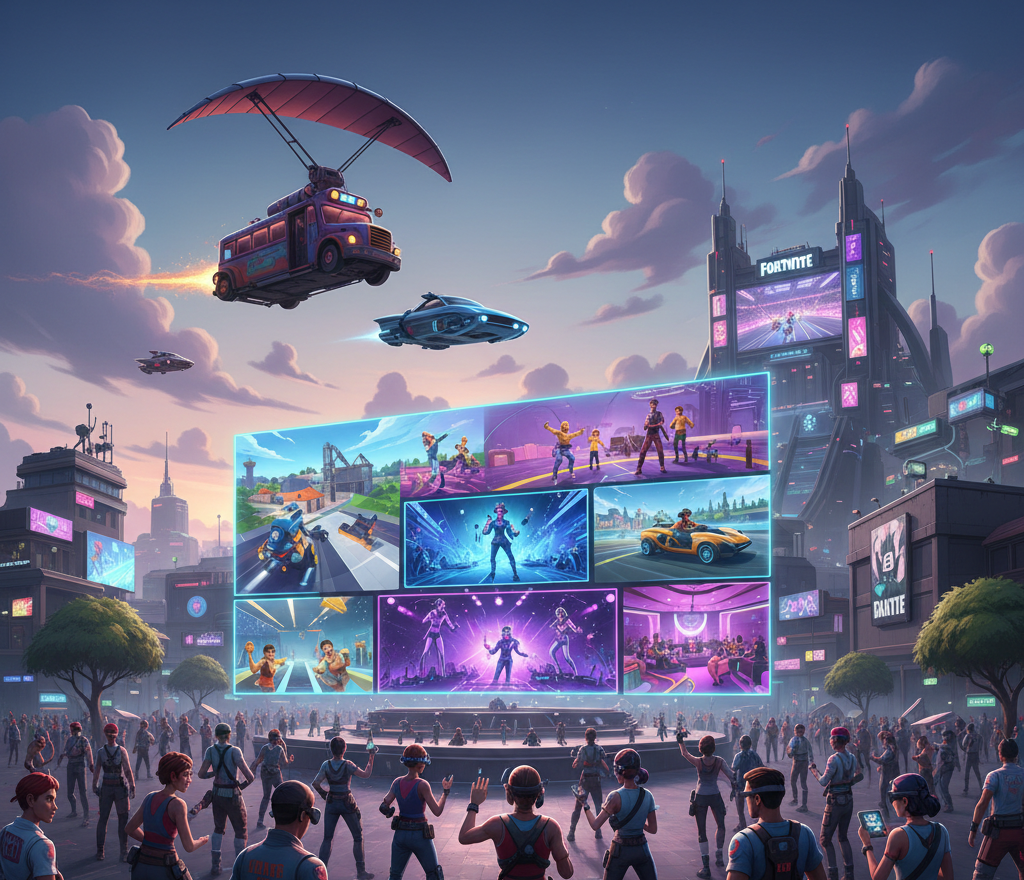
When Fortnite launched back in 2017, few could have predicted its journey. What started as a colorful battle royale quickly became a cultural phenomenon. Fast forward to 2026, and Fortnite is no longer defined by one genre, one mode, or even one audience. Today, Fortnite stands as a full-fledged gaming ecosystem—part shooter, part creative platform, part social network, and part digital entertainment hub.
So the big question gamers are asking in 2026 is simple: Is Fortnite still just a battle royale?
The answer is a confident no.
Let’s explore how Fortnite evolved, why it’s still thriving, and what makes it more relevant than ever in 2026.
Battle Royale Is Still the Heart—but Not the Whole Body
Let’s be clear: Fortnite’s Battle Royale mode is still alive and thriving in 2026. Regular map updates, rotating loot pools, seasonal themes, and evolving narratives keep the core experience fresh.
Players still drop in for:
-
Fast-paced gunplay
-
Constant meta shifts
-
Ranked and competitive modes
-
Iconic building mechanics (and Zero Build options)
Epic Games has mastered the art of reinvention without replacement. Instead of abandoning battle royale, they refined it—adding more player choice, smoother mechanics, and better matchmaking.
For competitive players, Fortnite remains one of the most watched and played multiplayer games in the world.
Zero Build Changed Fortnite Forever
One of the most important evolutions leading into 2026 was the success of Zero Build mode. By removing building, Fortnite opened its doors to millions of new players who loved the gunplay and movement but felt overwhelmed by high-level building.
In 2026, Zero Build isn’t a side option—it’s a pillar of the Fortnite experience. It brought:
-
Shooter-focused gameplay
-
Wider appeal to casual and console players
-
A more tactical, positioning-based playstyle
This single decision reshaped Fortnite’s identity and helped it stay competitive against modern shooters.
Creative Mode Became a Gaming Platform of Its Own
By 2026, Fortnite Creative is no longer “extra content”—it’s a platform inside a platform.
With the introduction and expansion of UEFN (Unreal Editor for Fortnite), creators gained professional-level tools to build experiences that rival standalone games. This includes:
-
RPGs and story-driven adventures
-
Horror games
-
Racing simulators
-
Roleplay cities
-
Social hangout worlds
Many gamers now log into Fortnite without ever touching Battle Royale. They come to explore community-made worlds, play custom modes with friends, or discover trending experiences.
Fortnite has quietly become one of the largest game distribution platforms in the world—powered almost entirely by its players.
Fortnite as a Social Space
In 2026, Fortnite is also a place to hang out.
Players meet friends in social hubs, attend virtual events, and explore non-competitive experiences together. Voice chat, emotes, shared lobbies, and party systems make Fortnite feel closer to a virtual playground than a traditional shooter.
For younger players especially, Fortnite fills a role similar to a social network:
-
You meet friends
-
You express identity through skins and emotes
-
You attend events together
-
You share moments, not just matches
This social layer is a huge reason Fortnite has remained relevant while other battle royales faded.
Live Events That Still Break the Internet
Fortnite’s live events remain unmatched in 2026.
Epic Games continues to deliver massive in-game spectacles—from story-driven map transformations to concerts featuring global artists. These events aren’t passive experiences. Players move, interact, and participate while millions watch online.
Live events have become Fortnite’s signature:
-
They push technical boundaries
-
They create shared global moments
-
They blend gaming, music, film, and storytelling
Few games can claim this level of cultural impact.
A Metaverse Without the Buzzword
While many companies struggled to define the “metaverse,” Fortnite quietly built one.
In 2026, Fortnite connects:
-
Games
-
Creative worlds
-
Social spaces
-
Virtual events
-
Digital economies
All inside a single, accessible platform.
Unlike vague metaverse concepts, Fortnite’s version works because it’s fun first. Players don’t log in for tech—they log in to play, create, and connect. The technology supports the experience, not the other way around.
A Creator Economy That Actually Works
Fortnite’s creator economy is one of the most searched topics among gamers—and for good reason.
Epic’s revenue-sharing model allows creators to earn real money based on engagement. This has led to:
-
Higher-quality creative maps
-
Full-time Fortnite creators and studios
-
Constant innovation within Creative mode
For aspiring developers, Fortnite in 2026 is both a game and a career path. You don’t need a publisher—just skill, creativity, and an audience.
Crossovers That Expand Fortnite’s Identity
Fortnite’s crossover culture is stronger than ever in 2026. From movies and anime to sports and music, Fortnite skins and events turn pop culture into playable experiences.
These collaborations aren’t just cosmetic—they often come with themed maps, quests, and gameplay mechanics. This keeps Fortnite feeling culturally relevant and constantly evolving.
For gamers, it means Fortnite is never disconnected from what’s trending globally.
Accessibility Across All Platforms
Another reason Fortnite remains massive in 2026 is accessibility.
Players can jump in on:
-
Console
-
PC
-
Cloud gaming platforms
Cross-play ensures friends can play together regardless of hardware. Frequent performance updates and scalable graphics settings keep Fortnite playable across a wide range of devices.
That inclusivity fuels its massive player base.
So… What Is Fortnite in 2026?
Fortnite in 2026 is:
-
A competitive shooter
-
A creative sandbox
-
A social platform
-
A live entertainment venue
-
A creator-driven economy
It’s no longer limited by genre—and that’s its greatest strength.
Final Verdict
Fortnite didn’t survive nearly a decade by standing still. It evolved—boldly and intentionally. By expanding beyond battle royale while respecting its roots, Fortnite has become something far bigger than a single game mode.
In 2026, Fortnite isn’t just a place to compete. It’s a place to create, to socialize, to experience culture, and to belong. Whether you’re dropping into Zero Build, exploring a creator-made world, or attending a live event with friends, Fortnite continues to prove that it’s not just part of gaming history—it’s shaping gaming’s future. 🎮✨