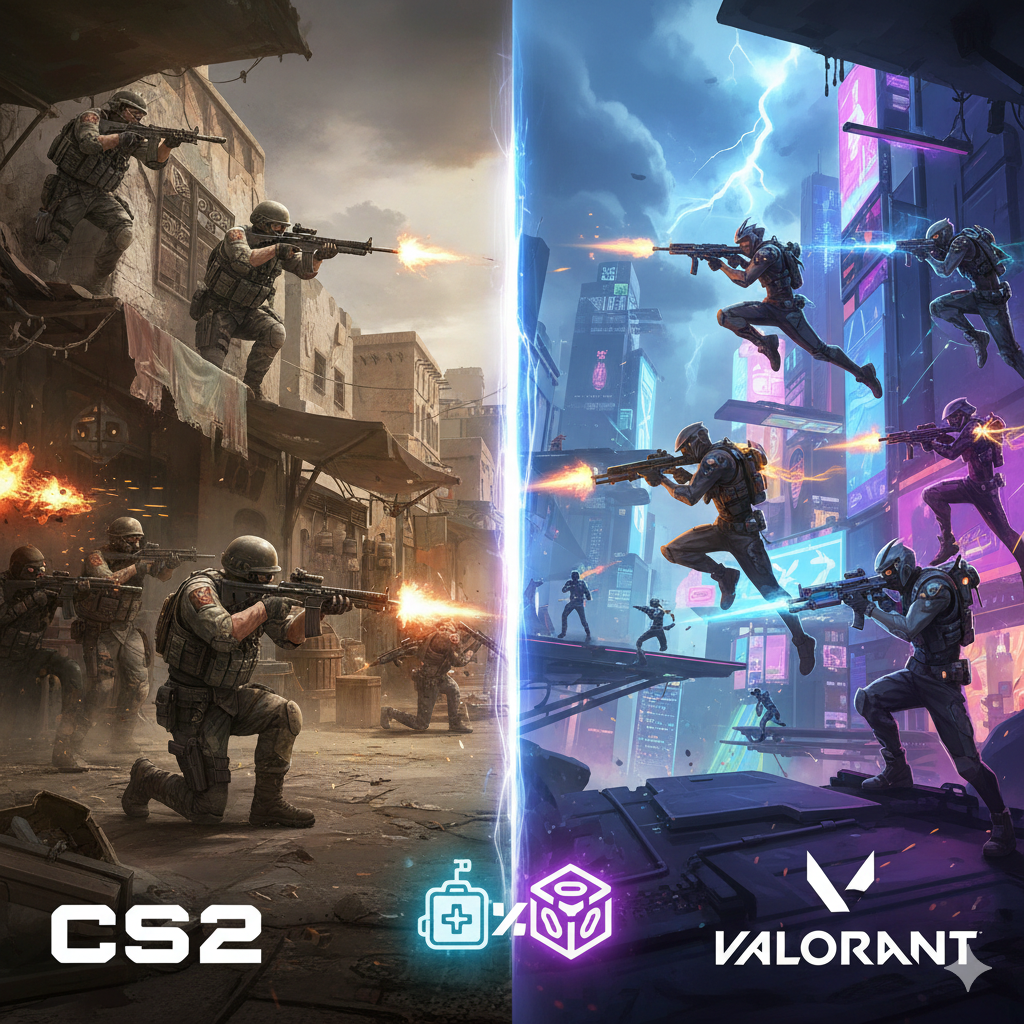
The tactical shooter genre has never been more competitive than it is in 2026. Two giants dominate the conversation, esports stages, and player debates worldwide: Counter-Strike 2 (CS2) and Valorant.
Both games attract millions of players daily, both have thriving esports scenes, and both represent very different philosophies of what a tactical shooter should be. So the big question gamers keep searching for is simple: Which one truly rules 2026?
The honest answer depends on what kind of player you are—but let’s break everything down clearly so you can decide for yourself.
Core Gameplay Philosophy: Pure Skill vs. Tactical Abilities
At its heart, CS2 is about fundamentals. Gunplay, positioning, recoil control, map knowledge, and team coordination define success. There are no abilities, no ultimates, and no character powers—every player enters the match on equal footing.
Valorant, on the other hand, blends classic tactical shooting with hero-based abilities. Each agent brings unique skills that can block vision, gather information, control space, or change how rounds play out entirely.
In 2026:
-
CS2 rewards mechanical mastery and consistency
-
Valorant rewards creativity, strategy, and ability synergy
Neither approach is better—just different. CS2 feels timeless and raw, while Valorant feels modern and dynamic.
Gunplay and Mechanics: The Feel of Every Shot
One of the most searched comparisons between CS2 and Valorant is gunplay—and for good reason.
CS2’s shooting mechanics are unforgiving but deeply satisfying. Spray patterns must be learned and mastered. Movement accuracy matters. One mistake can cost a round, but one perfect headshot can change everything. With Source 2 upgrades, CS2 in 2026 feels smoother, more responsive, and visually clearer than ever before.
Valorant’s gunplay is slightly more forgiving but still highly skill-based. Recoil patterns are tighter, and first-shot accuracy is more accessible to new players. However, gunfights are often influenced by abilities—flashes, smokes, traps, and recon tools shape engagements before bullets are fired.
If you love raw aim duels, CS2 feels unmatched. If you enjoy tactical setups and layered execution, Valorant shines.
Maps and Tactical Depth
CS2 maps are iconic. Dust II, Mirage, Inferno, and Nuke continue to evolve while preserving their competitive integrity. The new smoke physics in CS2 add deeper strategy—smokes can be broken, moved, or manipulated dynamically, making utility usage more complex than ever in 2026.
Valorant maps are designed around agent abilities. Verticality, choke points, and interactive elements encourage coordinated team play. New maps released over the years keep the experience fresh and force teams to adapt constantly.
In short:
-
CS2 maps reward knowledge built over thousands of hours
-
Valorant maps reward adaptation and teamwork
Both offer deep tactical layers, just approached from different design philosophies.
Learning Curve: Which Is Easier to Start?
For new players in 2026, accessibility matters.
Valorant generally feels more welcoming at the start. Clear tutorials, visible abilities, and forgiving gunplay help beginners understand what’s happening quickly. Agent roles also guide new players toward supportive or aggressive playstyles.
CS2 has a steeper learning curve. New players must understand recoil, economy management, positioning, and map control without much hand-holding. However, once those fundamentals click, the sense of improvement feels incredibly rewarding.
If you’re new to tactical shooters, Valorant is often easier to jump into. If you enjoy mastering complex mechanics over time, CS2 offers unmatched depth.
Competitive Ranked Experience
Ranked play is the backbone of both games in 2026.
CS2’s matchmaking focuses heavily on performance consistency, team play, and round impact. Climbing the ranks feels slow but meaningful, and high-level matches demand discipline and communication.
Valorant’s ranked system emphasizes both individual impact and teamwork. Agent mastery, clutch ability usage, and adaptability often decide matches. Frequent balance updates keep the ranked meta shifting, preventing stagnation.
Both ranked systems are highly competitive, but Valorant’s frequent updates make the experience feel more fluid, while CS2’s stability appeals to purists.
Esports Scene: Legacy vs. Innovation
When it comes to esports, both games dominate—but in different ways.
CS2 carries decades of Counter-Strike legacy. Its tournaments feel historic, prestigious, and deeply rooted in competitive culture. The esports scene in 2026 remains massive, with loyal fans and legendary organizations.
Valorant’s esports scene is younger but incredibly polished. Riot Games’ structured leagues, global events, and strong storytelling around teams and players make Valorant esports highly accessible and engaging for new viewers.
If you value tradition and legacy, CS2 stands tall. If you enjoy fast-growing, story-driven esports, Valorant leads the way.
Community and Culture
Community culture is another major difference gamers often search about.
CS2’s community is competitive, direct, and deeply experienced. Many players have been part of the ecosystem for years. The culture values skill, clutch moments, and consistency above all else.
Valorant’s community is more diverse in playstyles and backgrounds. Content creation, fan art, memes, and personality-driven streams play a bigger role. The game feels more social and expressive.
Both communities have passionate players, but the overall vibe differs significantly.
Updates, Balance, and Developer Support
In 2026, developer philosophy plays a huge role in long-term success.
Valve takes a measured approach with CS2. Updates focus on stability, performance, and subtle balance changes. This keeps the competitive environment predictable and fair.
Riot Games updates Valorant frequently. New agents, balance patches, and map changes keep the game evolving constantly. This ensures freshness but can also require players to adapt often.
If you prefer stability, CS2 fits better. If you love change and experimentation, Valorant delivers.
Hardware Performance and Accessibility
Both games run well on a wide range of PCs, but CS2 benefits from its optimized engine and lower system demands. Valorant also performs excellently and remains one of the most accessible competitive shooters in terms of hardware requirements.
Cross-region play, strong anti-cheat systems, and server improvements in 2026 keep both games competitive and fair.
So, Which Tactical Shooter Rules 2026?
The truth is, both do—just in different ways.
-
CS2 rules for players who love raw skill, timeless mechanics, and competitive purity
-
Valorant rules for players who enjoy tactical creativity, evolving metas, and ability-driven gameplay
Neither game replaces the other. Instead, they coexist at the top, offering two distinct visions of tactical shooting.
Final Verdict
In 2026, the tactical shooter crown isn’t worn by just one king. CS2 and Valorant dominate side by side, each excelling in what it does best. CS2 represents discipline, mastery, and legacy—proof that pure mechanics never go out of style. Valorant represents innovation, adaptability, and modern design—showing how the genre can evolve without losing its competitive edge.